From Sludge to Solution – A Sludge Dewatering Press for a Water Treatment Partner
Every project has its own personality. This one came with a bit of grit – literally.
We recently worked with a valued client – a supply and service provider in the water treatment industry. They were helping an end‑user facility that faced a daily dewatering challenge. The sludge was anything but ordinary: a mix of calcium carbonate, quartz, and cement powder, with a solids content of just 3%. The daily volume was modest – 5 cubic metres per day – but the material was abrasive, slightly corrosive, and mostly water. The goal? Reduce the water content to make disposal simpler and more cost‑effective.
The problem – thin sludge, thick challenges
At only 3% solids, that sludge is essentially liquid with a bit of grit. Dewatering it efficiently without clogging or wearing out equipment is not a walk in the park. And because it contains cement powder, corrosion is a real concern over time. Our customer needed a reliable, long‑lasting solution – but they also had a budget to respect.
The turning point – a simple test that changed everything
Before they came to us, our client had already done their homework. They ran polymer flocculation tests on the sludge – and the results were beautiful. The sludge formed tight, visible flocks, which is exactly what we look for to make a sludge dewatering press work its magic. They shared all the test data with us, and we analysed it carefully.
That data confirmed two things:
- A sludge dewatering press would be the perfect fit – our technology relies on good flocculation to separate water from solids efficiently.
- We could confidently size the right machine for their 5 m³/day flow.
Our recommendation – the right tool, and the right material
We proposed our compact Model-251 Sludge Dewatering Press (model sized for their throughput). But we didn't stop at the machine itself. Because of the cement powder's corrosive nature, we offered two stainless steel options:
- Stainless steel 316L – our top recommendation for maximum corrosion resistance and a long service life.
- Stainless steel 304 – a more budget‑friendly alternative that still offers good durability, though slightly less resistant to aggressive conditions.
We laid out the trade‑offs clearly – performance, longevity, and cost – so our customer could make an informed choice based on their operating environment and budget.
The decision – a wise compromise
After careful consideration, our customer chose the 304 stainless steel version. We fully respected their decision. We confirmed that 304 would perform reliably under their specific conditions – it just might need a little extra care and maintenance over the years. And we assured them that we'd be there to support them every step of the way.
The result – a tailored solution, ready to roll
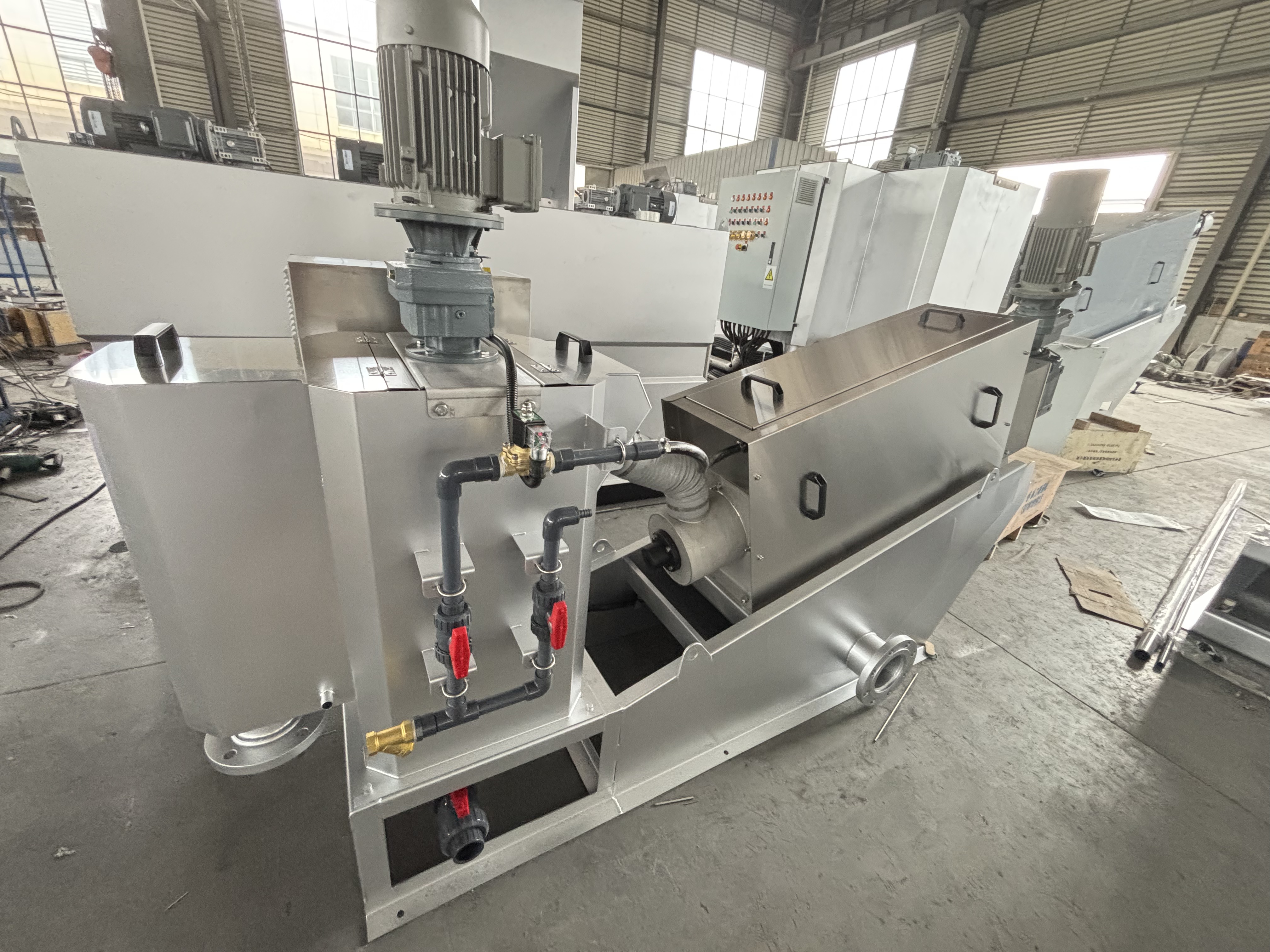
With the order placed, we manufactured the unit and prepared it for shipment. Now the screw press is packed and ready to head to its new home, where it will turn that tricky slurry into manageable, drier solids – saving money, space, and hassle.
Our clear process – from start to finish
- Customer shares sludge sample and flocculation test results.
- We analyse the data and confirm screw press suitability.
- We recommend the right model and discuss material choices.
- Customer selects the option that fits their budget.
- We manufacture and prepare for delivery.
- Unit is shipped – and the story continues.
📸 Check out what we deliver:
Click for more information:
[YouTube]
Got a tough sludge? Reach out – we love puzzles like this!
📢 Any requirements? Contact us now!