Tailored Sludge Dewatering Solution for an MBBR Plant
Introduction and Client Requirements
Our client, a well‑established engineering company in Saudi Arabia, was tasked with managing sludge generated by a moving bed biofilm reactor (MBBR) wastewater treatment plant. The daily sludge output was approximately 4–5 m³, with a solid concentration of 0.67%. The client specifically expressed interest in our model JX-DL202 sludge dewatering press, and also required a sludge feed pump and a chemical dosing unit to complete the system.
Based on our technical assessment, the JX-DL202 was indeed the right fit for this capacity and sludge characteristics. We further recommended our Model‑500 dosing unit, complete with a skid base, piping, valves, and all necessary accessories for seamless integration.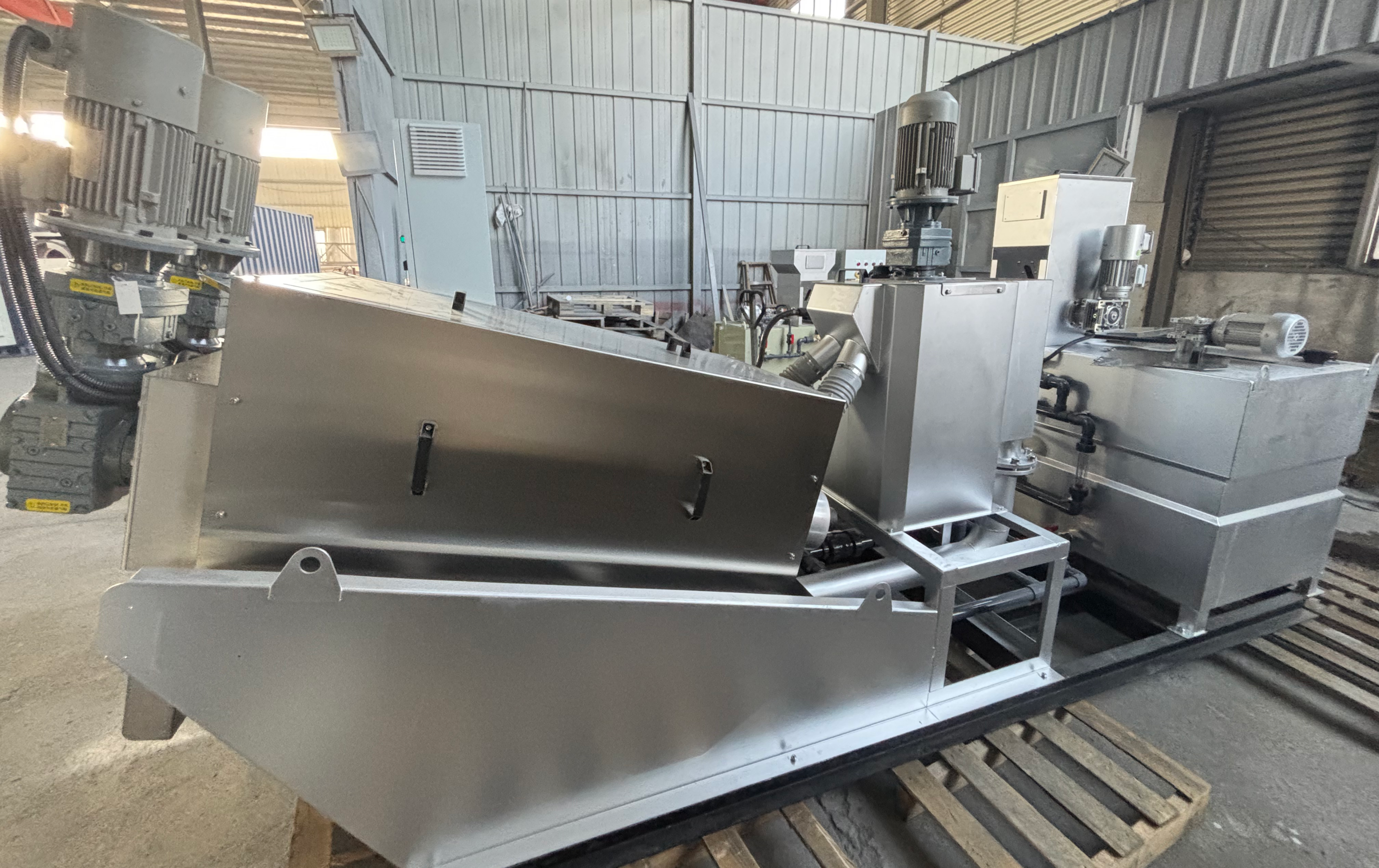
Addressing the Client’s Primary Concern: Operational Complexity and Maintenance
Despite the apparent technical match, the client raised a valid concern: they worried that the sludge dewatering press might be complicated to operate and demanding to maintain. They questioned whether a sludge dewatering press was truly the most suitable choice for their site.
To alleviate these doubts, we presented a comprehensive, fact‑based explanation highlighting the inherent advantages of sludge dewatering technology:
- High degree of automation – The press is equipped with an automated control system that enables automatic feeding, dewatering, and cake discharge. This minimises manual intervention, reduces labour costs, and ensures consistent performance.
- Superior dewatering performance – The spiral shaft progressively compresses and squeezes the sludge, achieving a low moisture content in the final cake. The dewatering efficiency is comparable to, and often better than, many alternative technologies.
- Low operating costs – The screw design consumes less energy and requires minimal routine maintenance. The robust construction also promises a long service life, further lowering total cost of ownership.
- Compact footprint – With its space‑saving, integrated structure, the equipment fits easily into sites with limited floor area – a particularly valuable feature for this project.
We emphasised that the dewatering press is a mature, proven solution that has been widely adopted in municipal and industrial sludge treatment for over a decade. Compared to plate‑and‑frame filter presses and other conventional dewatering devices, it offers superior overall efficiency, reliability, and ease of operation. This analysis effectively countered the client’s perception of high complexity, reassuring them that the system could be operated smoothly by their local team with minimal training.
Process Optimisation: Polymer Dosing Recommendation
To achieve the best dewatering results, we advised the client to maintain a polymer addition ratio of 0.1–0.2% of the sludge flow. However, we also recommended conducting on‑site trials with different polymer types and dosages to identify the optimal formulation, as sludge characteristics can vary with operational conditions. This practical, safety‑first approach gave the client confidence that they could fine‑tune the process once the equipment was installed.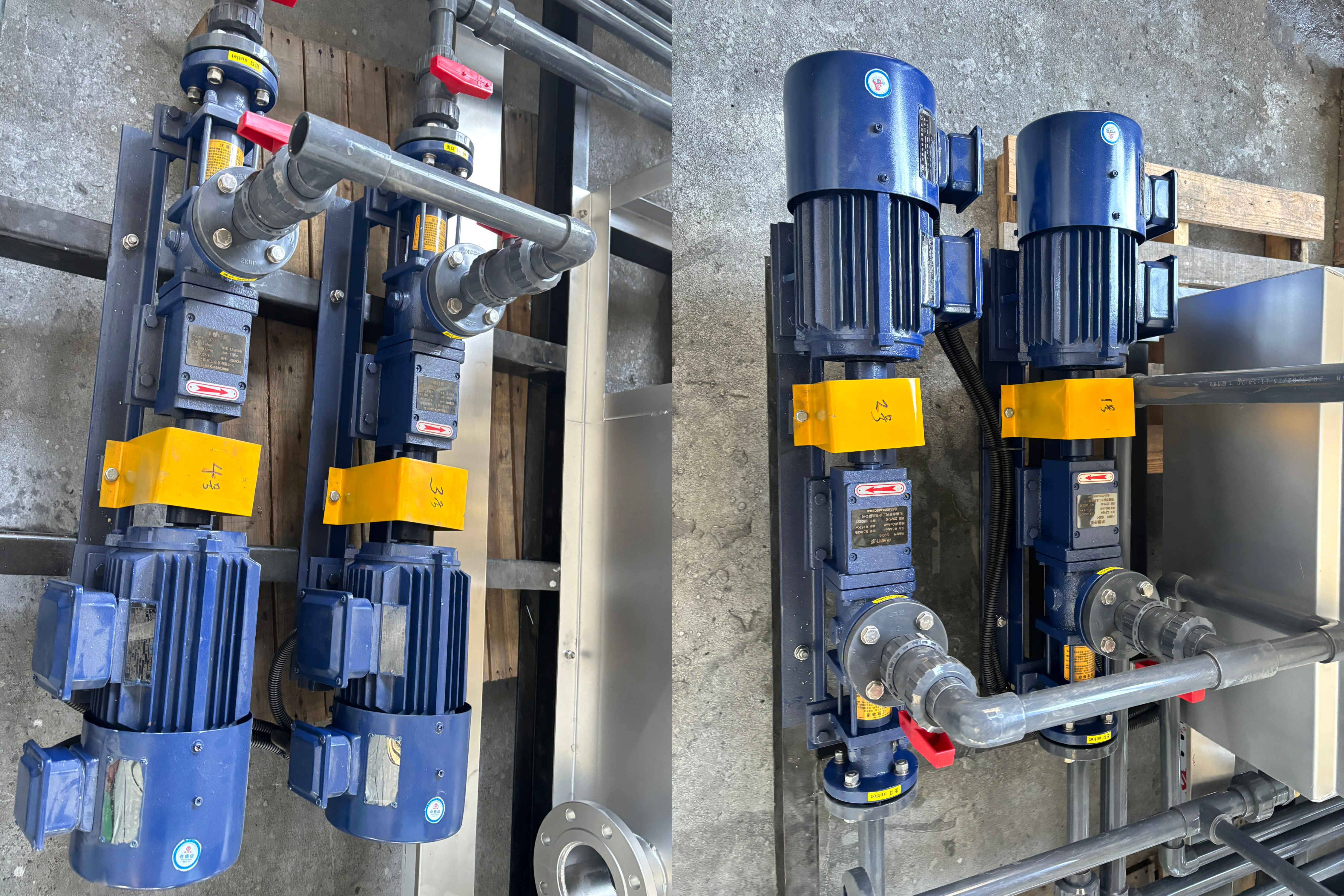
Customised Design to Meet Site‑Specific Needs
The client had two additional customisation requests:
- Odour control – They required a flange opening with an outer diameter of 75 mm and a cable conduit of the same size (75 mm) to connect to an odour extraction system.
- Containerised integration – They wanted the JX-DL202 dewatering press, the 500‑dosing unit, and both G20 and G30 feed pumps to be mounted inside a single container, providing a plug‑and‑play solution that could be quickly deployed on site.
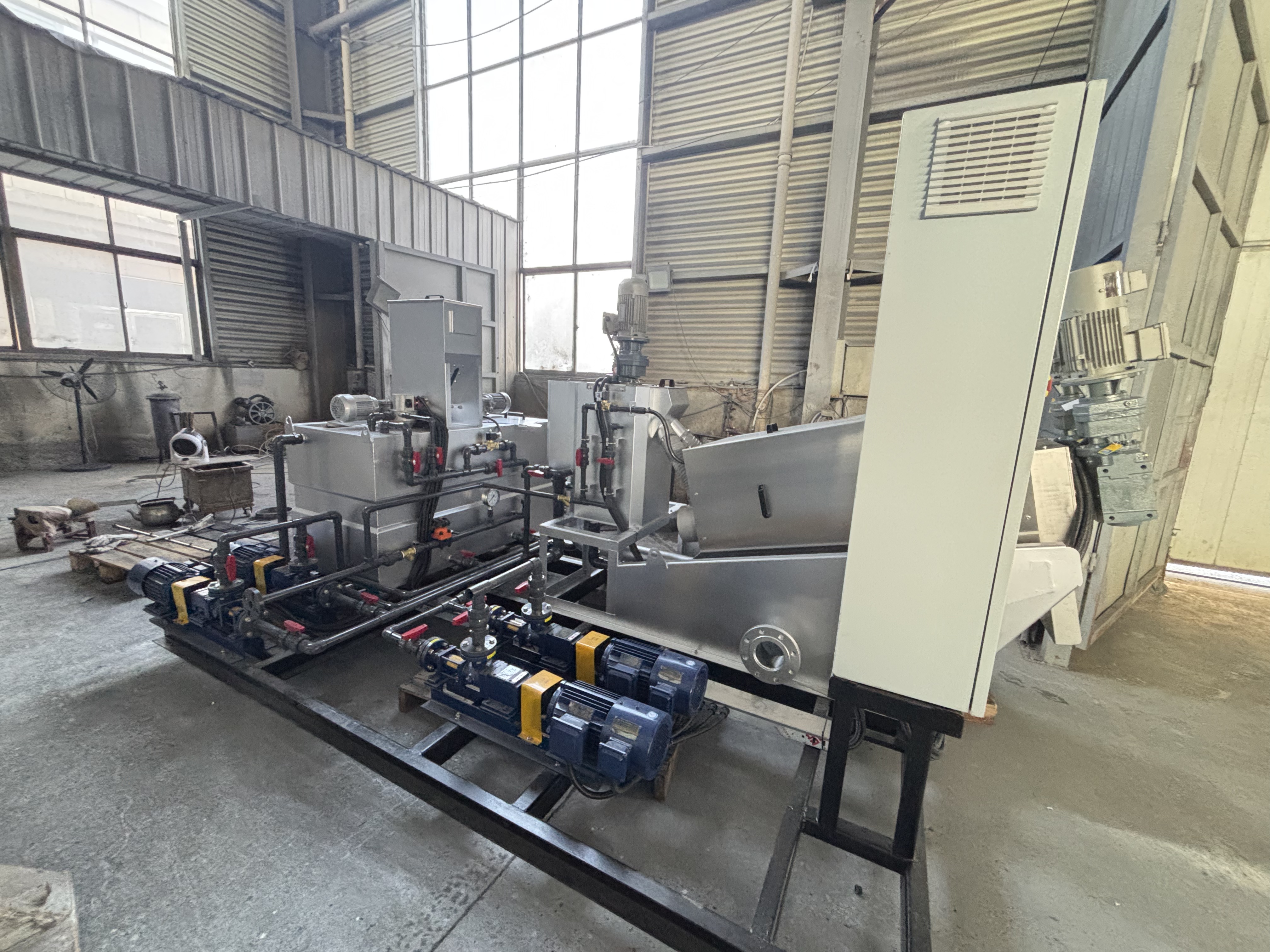
We confirmed that all equipment could be installed within a standard 20‑foot shipping container, with careful layout planning to reserve adequate space for operators to work safely and comfortably. The entire system – including all interconnecting piping, wiring, and control panels – was engineered to be pre‑commissioned at our workshop, so the client would only need to connect utilities on arrival.
Outcome: Order Placed and Positive After‑Sales Follow‑Up
One month after our final proposal and technical clarifications, the client placed the full order. The equipment was manufactured, containerised, and shipped according to the agreed schedule.
In our post‑delivery after‑sales follow‑up, we contacted the client to check on installation and commissioning. Their feedback was entirely positive – no issues were reported, and the system had been running stably, meeting all performance expectations.
If you want to know more about this system, here is a video for your reference:
Got a tough sludge? Reach out – we love puzzles like this!
📢 Any requirements? Contact us now!