Sludge Dewatering Solution for a Cheese Factory
Understanding the Project through Initial Meetings
We were approached by a cheese manufacturing facility in Canada seeking an efficient solution for their sludge dewatering needs. Through a initial meeting, we gained a thorough understanding of their process and requirements.
The sludge generated at the plant undergoes thickening treatment before entering the dewatering system. Their system produces approximately 50 cubic metres of sludge per day, with a solids concentration ranging between 2% and 5%. This meant that the daily feed volume to the dewatering press would be around 50 m³.
The client's initial expectation was to achieve 15% solids content, with an operating window of no more than 5 hours per day. Based on these parameters, we recommended 2 units of our Model 403 dewatering press in 304 stainless steel to handle the load.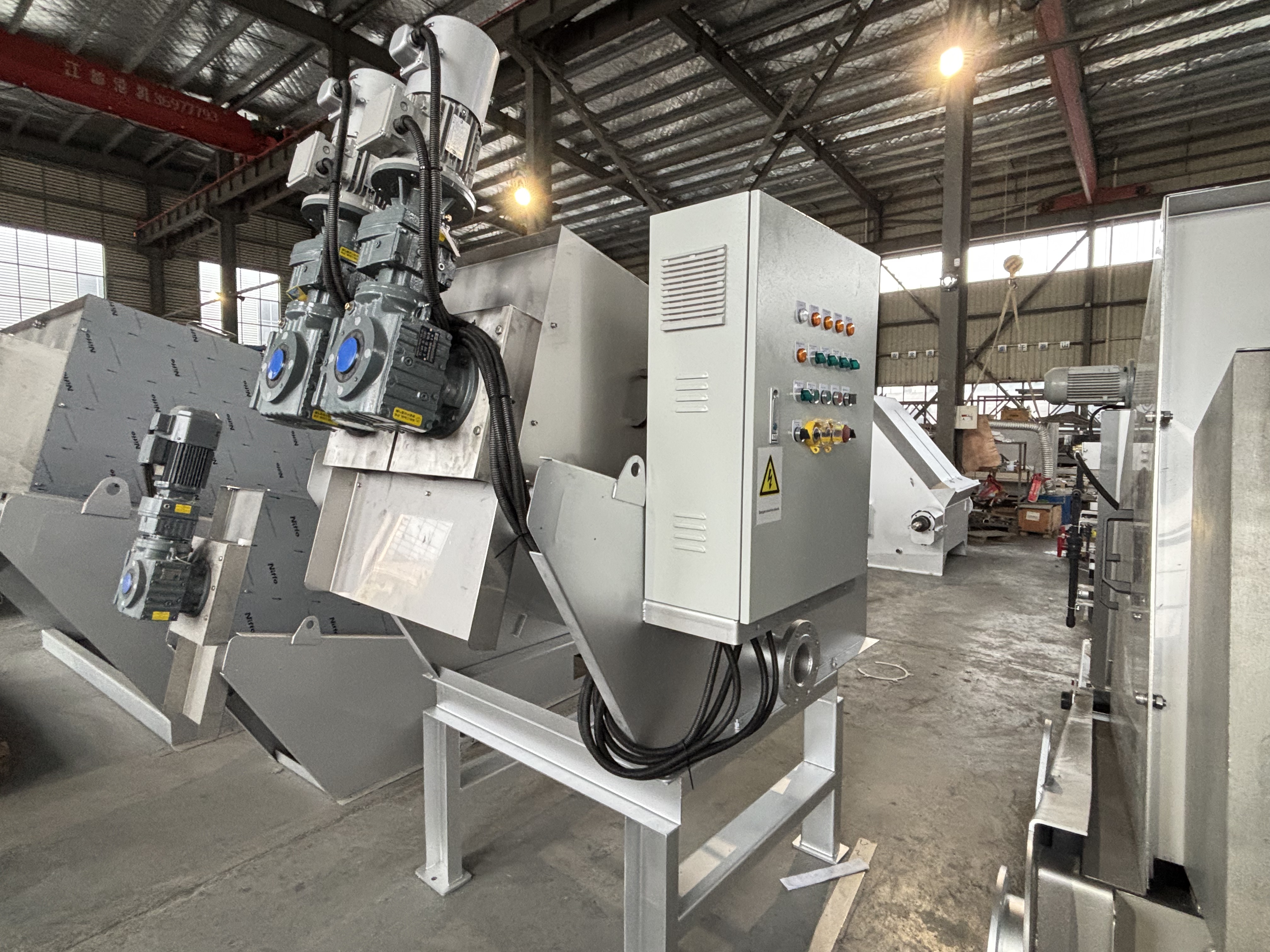
Refining the Specification with More Precise Data
As our discussions progressed, the client provided us with updated and more accurate data:
- A thickener was already installed upstream of the dewatering press, so dosing unit was not required – they only needed the dewatering unit itself.
- The thickened sludge output was confirmed at approximately 50 tonnes per day, with a solids concentration of 2% to 5%.
- The final solid production was expected to be around 1.5 to 2 tonnes per day.
- Their new target was to produce 8 to 10 tonnes of solids at 18% concentration.
- The daily operating time could be extended to 12 to 16 hours, rather than the previously limited 5‑hour window.
With this revised information, we reassessed the equipment sizing. A single unit of the Model 202 dewatering press in 304 stainless steel proved to be perfectly adequate for the job. The extended running time allowed us to downsize the equipment while maintaining the required output, which offered the client a more cost‑effective solution.
The client also expressed interest in the smaller Model 201 as a potential alternative, but after careful evaluation, they ultimately confirmed their preference for the Model 202 – a balanced choice that offered reliable performance with a comfortable margin.
Additional Equipment and Process Optimisation
Screw Conveyor for Solids Transfer
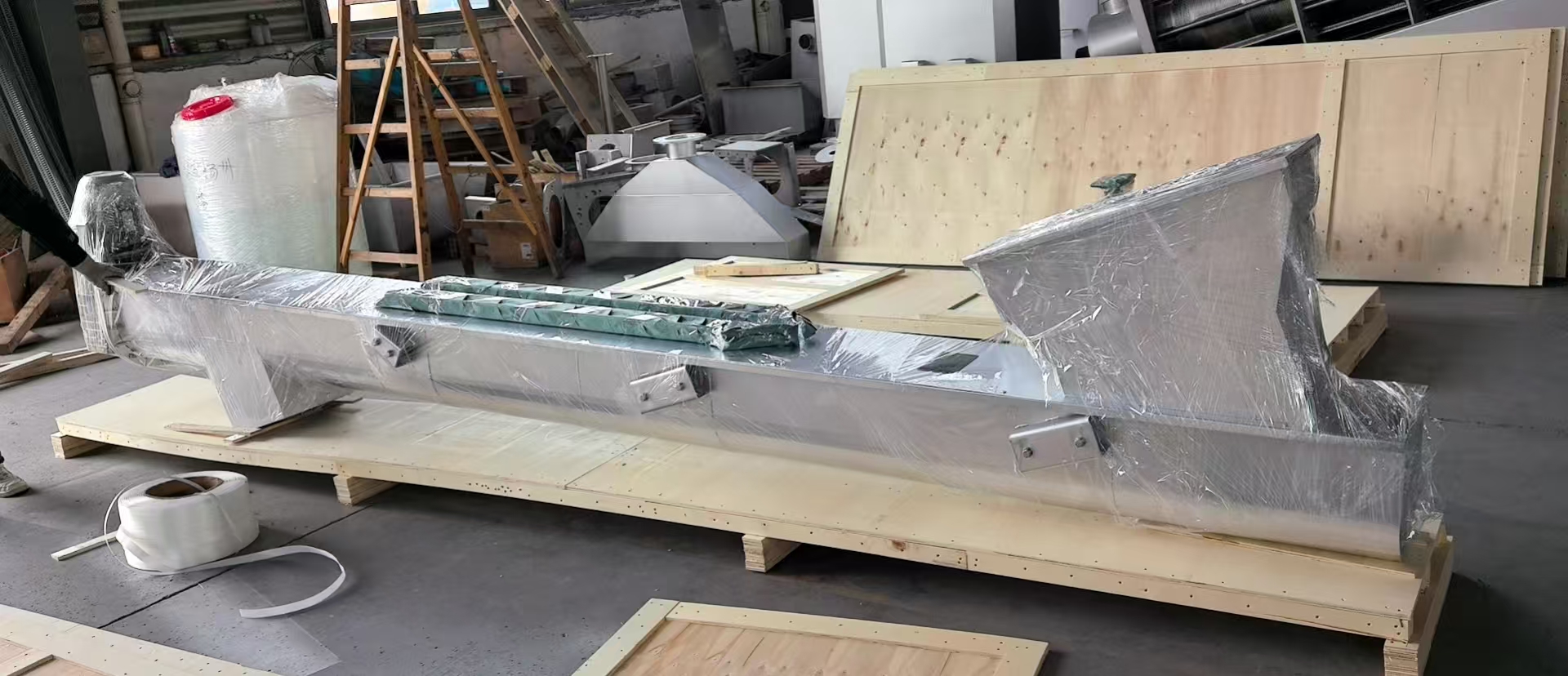
The client needed the dewatered solids to be transported from the press outlet to a storage bin located outside the building. Based on the conveying distance and layout, we recommended and supplied a screw conveyor as the ideal transfer solution.
Stirring System – A Customisation Saving
Our standard dewatering press includes an integrated stirring system above the feed inlet. This serves two functions: it ensures thorough mixing of the incoming sludge for consistent dewatering, and it acts as a barrier to prevent any hard objects from entering and damaging the compression mechanism. However, the client confirmed that they did not require this feature, so we removed it from the design – which also helped reduce the overall cost.
Final Equipment Configuration
Within a short time, the client made their final decision and placed an order for:
- One Model 202 dewatering press – 304 stainless steel construction
- One screw conveyor for solids transfer
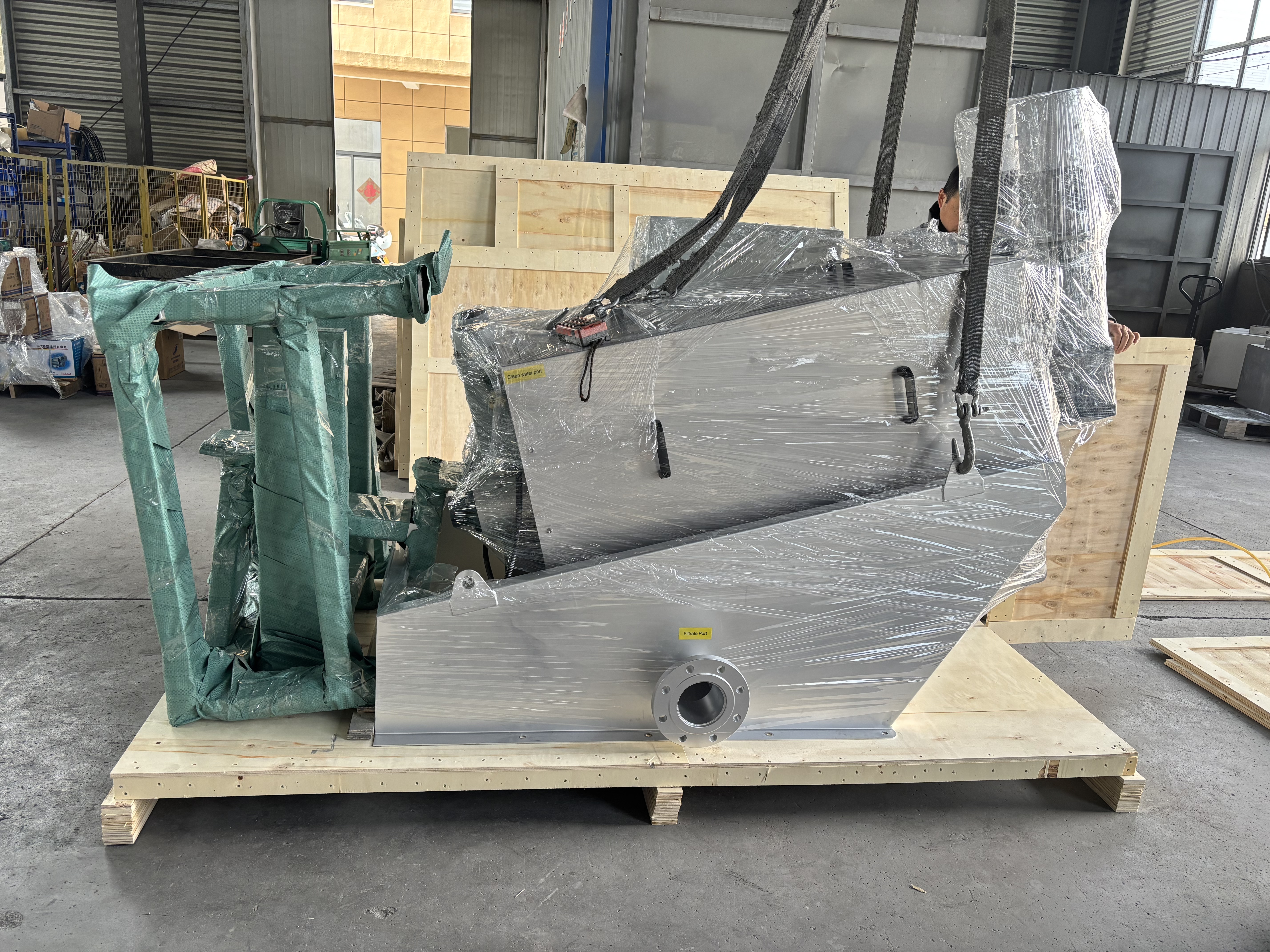 The equipment was engineered to meet their specific power requirements (575V/60Hz/3‑phase) and was customised with all necessary flanges, connections, and interfaces as per the detailed drawings we provided and confirmed together.