Crusher + Model 350 Press for Food Waste Dewatering in Chile
Background
Our client in Chile is engaged in the collection and treatment of food waste. To reduce the moisture content of the waste and lower disposal costs, the client required a dewatering solution with a processing capacity of 1 ton per day.
Process Requirements
The client's food waste treatment process is as follows:
- Food waste collected in 120-liter bins is tipped onto a sorting table.
- The waste is then pushed or manually loaded into the press.
- The dewatered residue must be discharged directly into a mechanical composter.
This required the equipment to be compact, easy to integrate into the existing workflow, and capable of delivering dewatered residue with a moisture content suitable for direct composting.
Solution
We offer a complete, professional food waste treatment system. After careful consideration and several rounds of communication, the client confirmed our recommended solution:
Crusher + Model 350 Press
- The crusher reduces the particle size of the food waste, ensuring a more uniform feed for the press and improving dewatering efficiency.
- The Model 350 Press dewaters the crushed waste. The moisture content of the discharged residue can be adjusted by regulating the pressure, allowing the client to achieve the desired dryness for direct feeding into the mechanical composter.
This combination provides a reliable, continuous process from bin tipping to dewatered residue output, while keeping the operation simple and the footprint compact.
Equipment Delivered
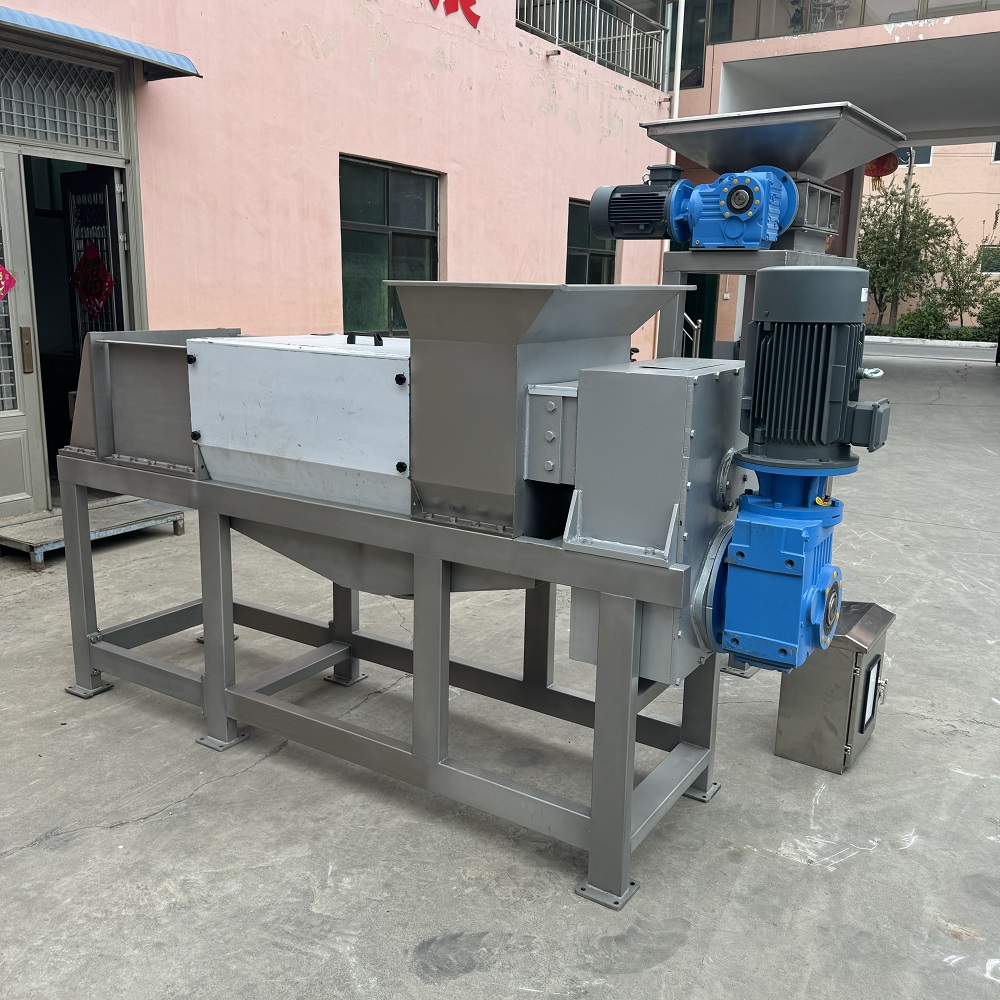
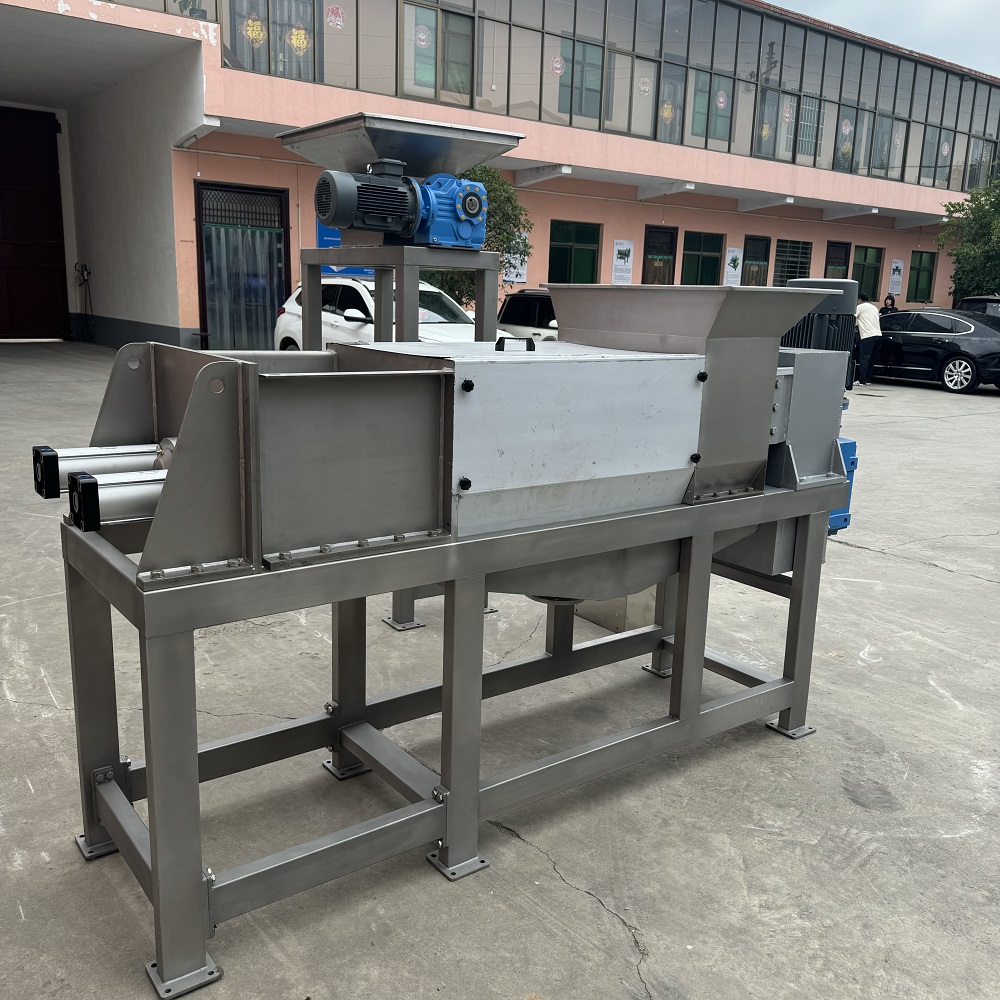
The delivered equipment — the crusher and the Model 350 Press — has been smoothly integrated into the client's food waste treatment line. During our follow-up, the client reported that it is running well.
Benefits
- Processing capacity of 1 ton/day meets the customer's daily treatment requirement.
- Adjustable pressure allows flexible control of the final moisture content, ensuring the dewatered waste is suitable for direct mechanical composting.
- Crusher + Press combination improves dewatering performance and produces a more consistent residue.
- Compact, integrated design fits smoothly into the customer's existing bin-tipping and conveying workflow.
- Reduced waste moisture lowers hauling and disposal costs and supports the customer's composting operation.