Custom Titanium Filter Housing for Sodium Hypochlorite
Introduction
It is a project for a chemical manufacturing company in Paraguay. The client needed a reliable filtration solution for handling sodium hypochlorite (NaOCl), a highly corrosive chemical. Our goal was to supply a filter housing that would meet the client’s strict technical requirements and ensure safe, long‑term operation.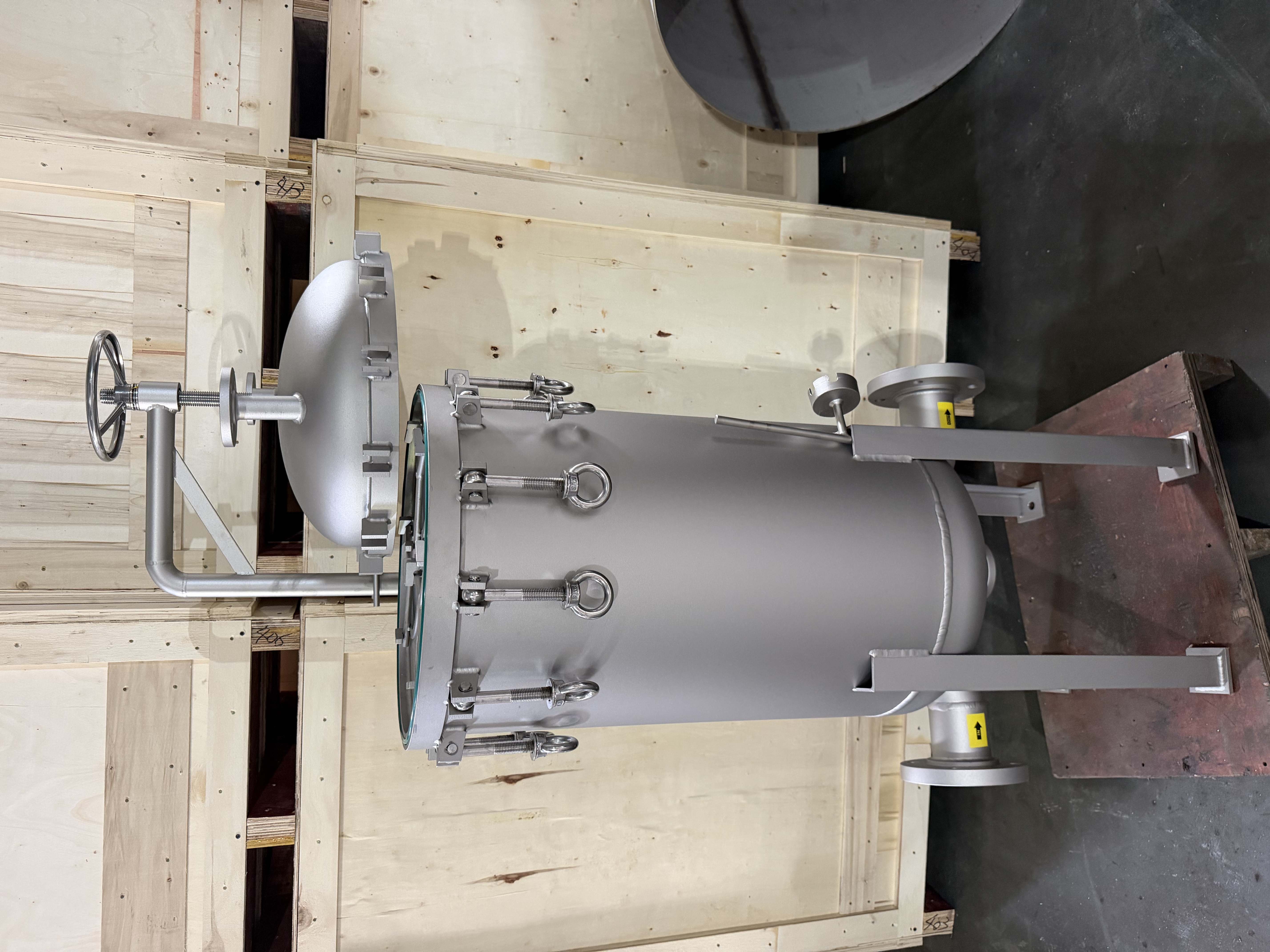
client Requirements
The client required a bag filter housing capable of holding three filter bags. The fluid to be filtered was sodium hypochlorite with a concentration of 130 gpL Cl₂. The design flow rate was specified as 40 m³/h.
Because sodium hypochlorite is strongly oxidizing and corrosive, the client emphasised one critical condition: all wetted parts – every component that comes into contact with the fluid – must be made of titanium. This was not a suggestion but a mandatory requirement, as any other material could react with the chemical and cause premature failure or contamination.
Material Selection
Client initially presented several material options to us:
- PVDF (a high‑performance plastic)
- Alloy C22 (a nickel‑based alloy)
- Carbon steel lined with PFA/PTFE/PVDF
- Titanium
After careful evaluation, the client confirmed their final choice: titanium. They reiterated that titanium was the best material that would guarantee resistance to the aggressive sodium hypochlorite environment. We fully respected this decision and proceeded with a design using solid titanium for all wetted components.
Initial Order and Trial Strategy
Initially, the client planned to purchase two units of 3-bag filter housings. However, because of the specialised material and the high cost of titanium fabrication, they decided to start with a single unit as a trial. This approach allowed them to test the performance in their actual production line before committing to a larger order.
The trial unit was built to the exact same specifications as the future repeat units. We agreed that if the first filter performed as expected, the client would place a follow‑on order for additional housings.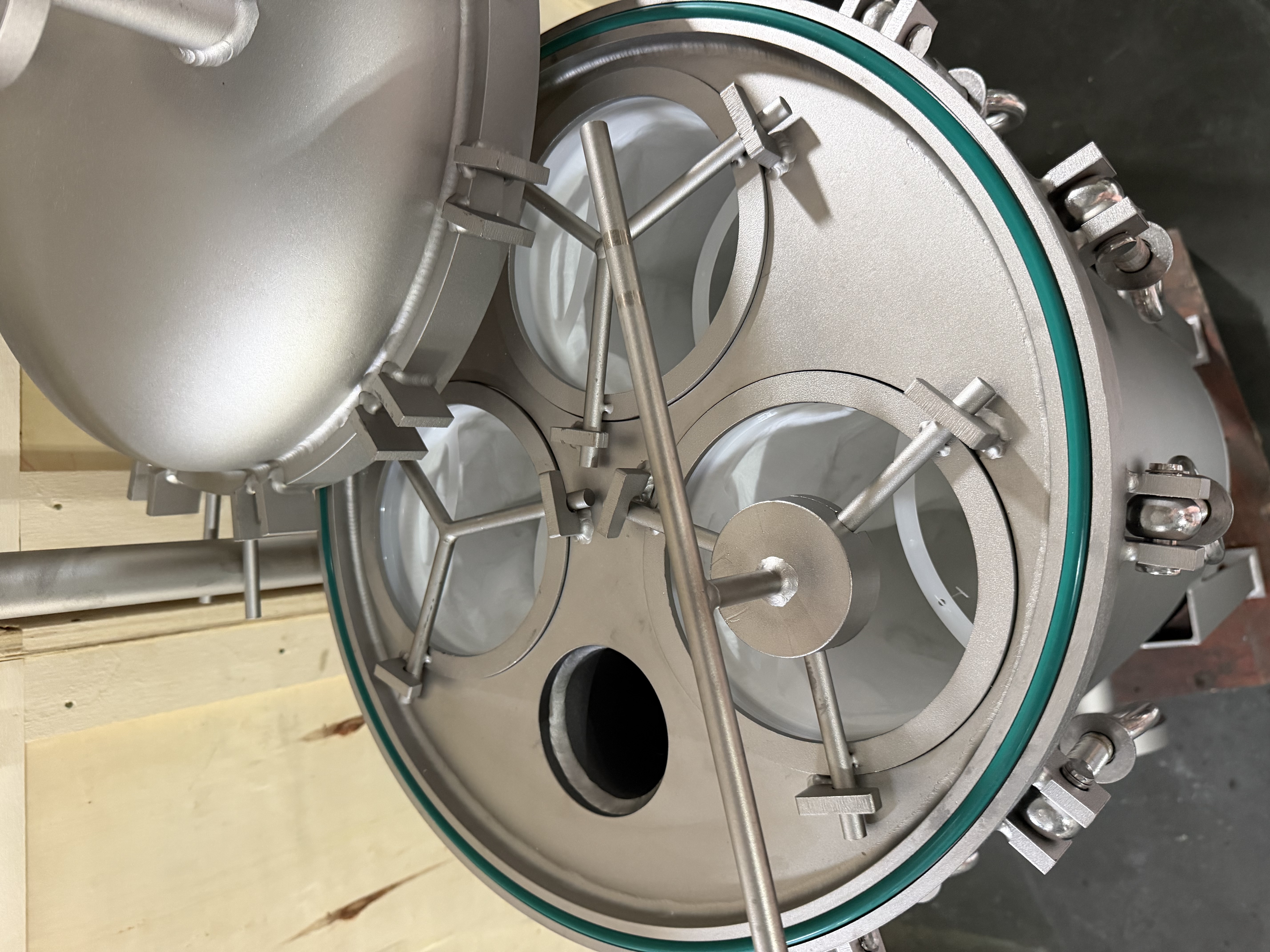
Design and Drawing Confirmation
Before manufacturing began, we worked closely with the client to finalise all technical details. Key points discussed and confirmed included:
- Flange standard
- Design / Operation pressure
- Inlet and outlet sizes
We prepared detailed engineering drawings and submitted them to the client for review. After several rounds of feedback and adjustments, the client gave final approval on the drawings. This step ensured that the finished product would match their expectations perfectly and integrate seamlessly into their existing setup.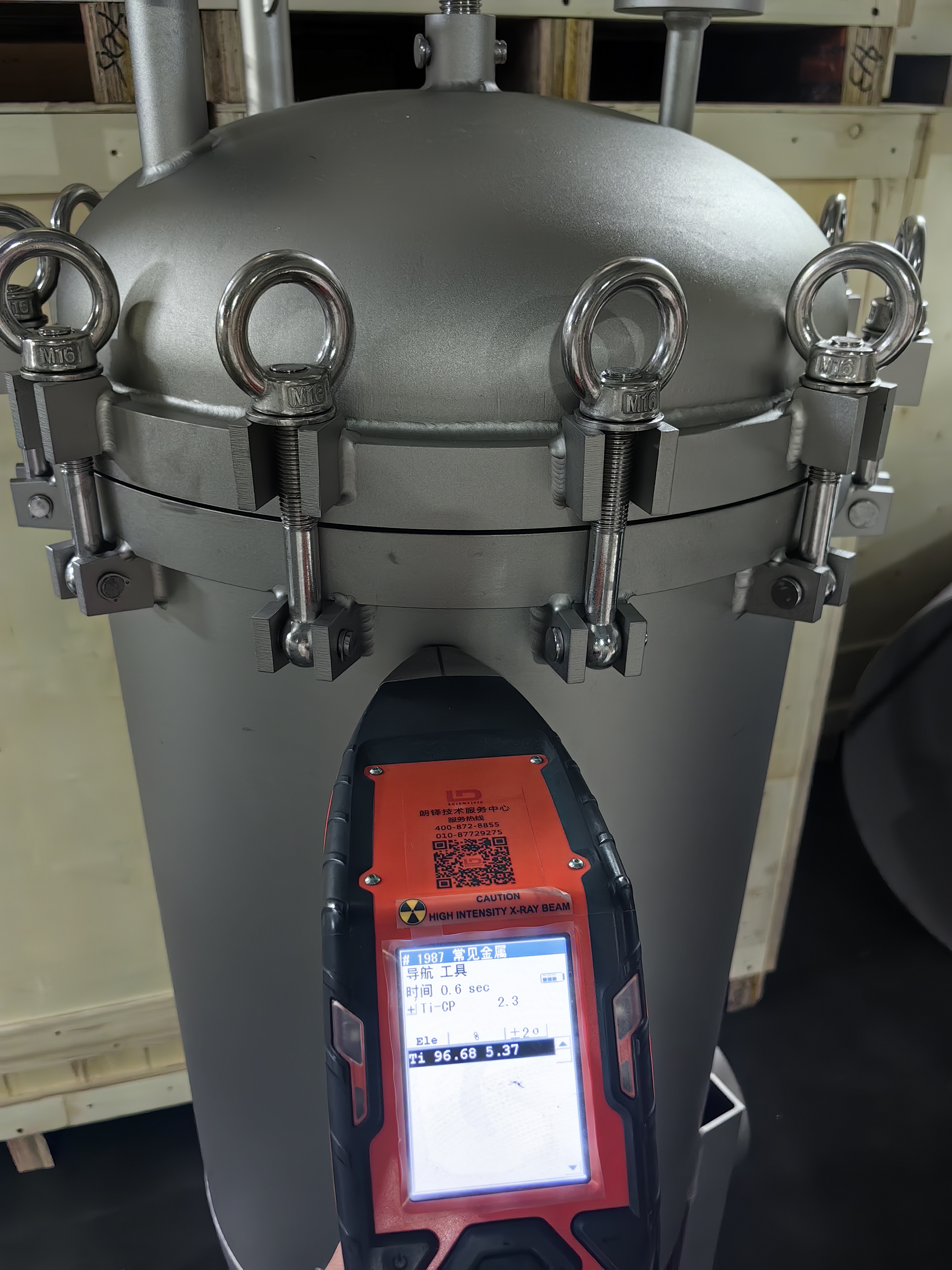
Manufacturing and Quality Assurance
With the approved drawings, we started production. Since titanium requires special welding and machining techniques, our workshop followed strict procedures to prevent contamination and ensure weld integrity. All welds were inspected and tested, and we performed a hydrostatic pressure test on the completed housing to verify its strength and leak‑tightness.