Self-Cleaning Filtration Solution for High-Viscosity Water-Based Paint
Application Overview
The paint and coatings industry presents some of the most challenging filtration applications. High solids content, high viscosity, and sticky pigments can easily cause clogging and high differential pressure on filtration equipment.
For this project, the client required a filtration system for high-solids water-based paint with the following operating conditions:
Process Data
· Application: Water-based paint filtration
· Flow Capacity: 12,000 kg/h
· Filtration Rating: 100 μm
· Viscosity Range: 2,000–13,200 mPa·s
· Media: High-solids water-based paint
· Material of Construction: SS304
· Motor Protection: ATEX Zone 1 Explosion-Proof
Because of the highly viscous nature of the paint, selecting the right self-cleaning mechanism was critical to ensure reliable operation.
The Challenge of Filtering High-Viscosity Paint
Many filtration systems use conventional scraper-type self-cleaning filters. These systems perform well when handling:
· Low-viscosity liquids
· Low solids concentration
· Solids that can fall freely by gravity
In these applications, the scraper removes the particles from the filter screen and the solids simply drop into the discharge chamber.
However, high-solids water-based paint behaves very differently.
With viscosities as high as 13,200 mPa·s, the separated solids become sticky and cannot fall naturally into the discharge port. Instead, they tend to accumulate inside the filter housing, causing:
· Increased torque on the motor
· Higher differential pressure
· Reduced cleaning efficiency
· Potential motor overload and failure
· Frequent maintenance and downtime
For high-viscosity coatings, gravity alone is no longer sufficient to remove the solids.
Our Solution: Spiral Scraper Self-Cleaning Filter
Based on our experience in paint filtration, we recommended our Spiral Scraper Self-Cleaning Filter.
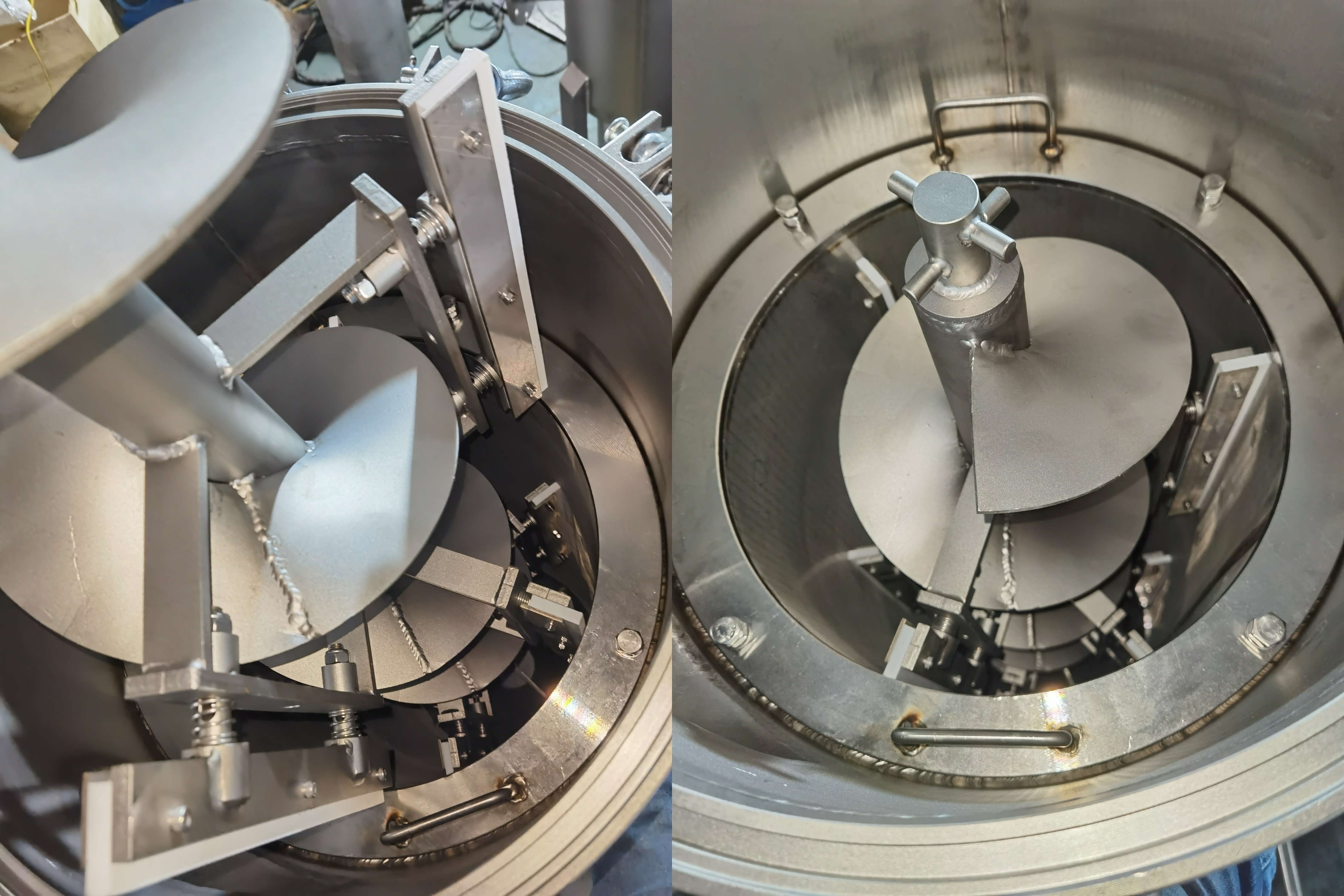
Unlike conventional scraper systems, the spiral scraper continuously pushes the collected solids toward the discharge chamber in a screw-conveying action.
How It Works
1. Paint flows through the filter screen.
2. Solids are retained on the screen surface.
3. The spiral scraper removes the solids and actively transports them to the bottom discharge area.
4. The discharge valve opens automatically according to the differential pressure setting and removes the concentrated solids.
This design prevents solids from accumulating inside the housing and ensures continuous filtration.
Why a Spiral Scraper is Better for High-Solids Paint
Efficient Solids Transport
The spiral action actively conveys sticky solids to the discharge port instead of relying on gravity.
Lower Motor Resistance
Because the solids are continuously moved to the bottom of the housing, there is almost no solids accumulation around the rotating components and motor-driven section.
Reduced Risk of Motor Failure
With minimal resistance and lower operating torque, the motor experiences very little additional load, significantly reducing the risk of overheating or burnout.
Stable Continuous Operation
The system maintains stable differential pressure and reliable self-cleaning performance even when handling highly viscous, high-solids coatings.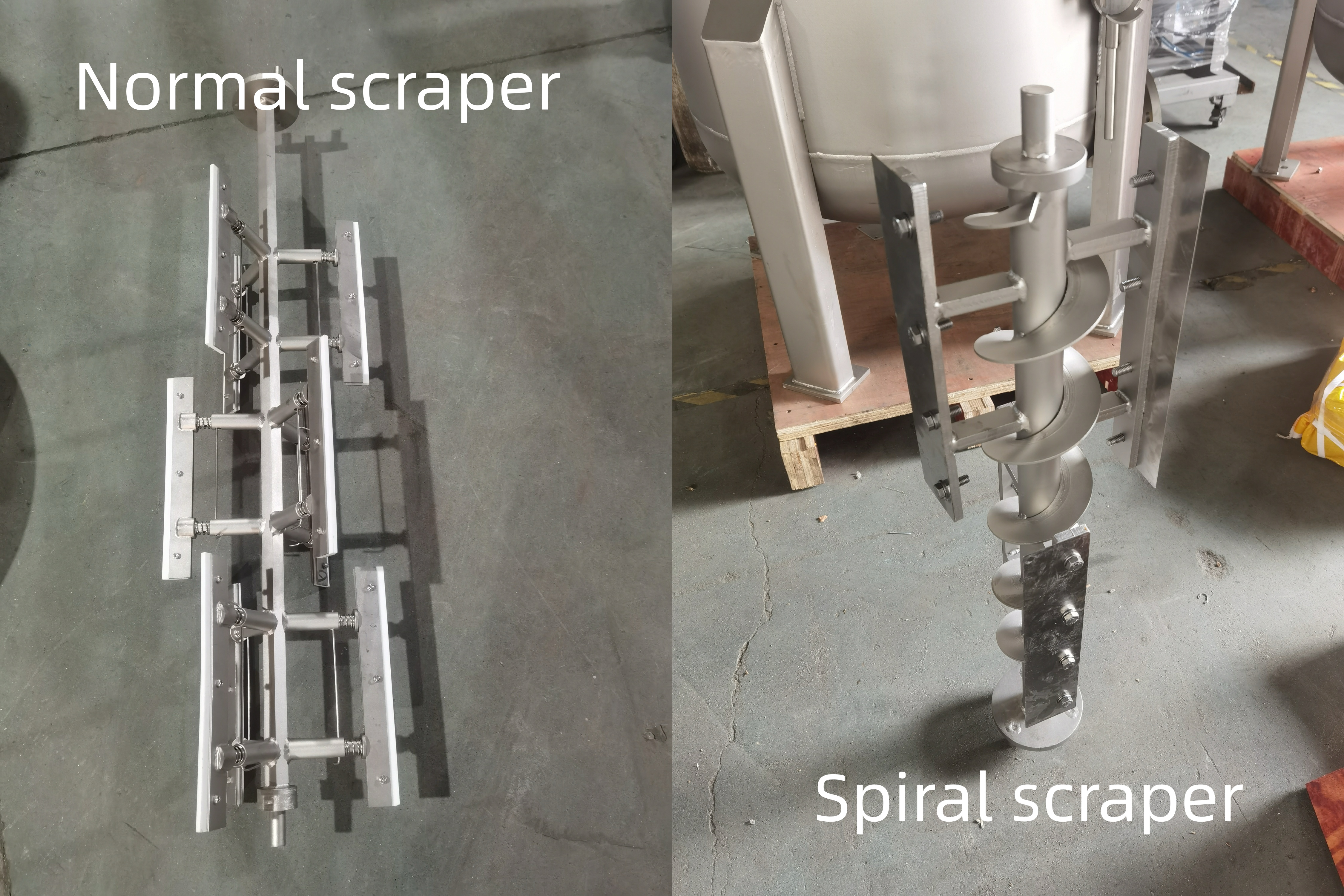
Why Application Knowledge Matters
Many filtration problems in the paint industry are not caused by the filter itself, but by selecting the wrong cleaning mechanism.
Conventional Scraper Filters
Suitable for:
· Low-viscosity liquids
· Low solids concentration
· Applications where solids can fall by gravity
Spiral Scraper Filters
Recommended for:
· High-viscosity coatings
· High solids content media
· Sticky pigments and resins
· Water-based paints and coating materials that cannot discharge by gravity
Understanding the behavior of the process fluid is essential to selecting the right filtration technology.
Result
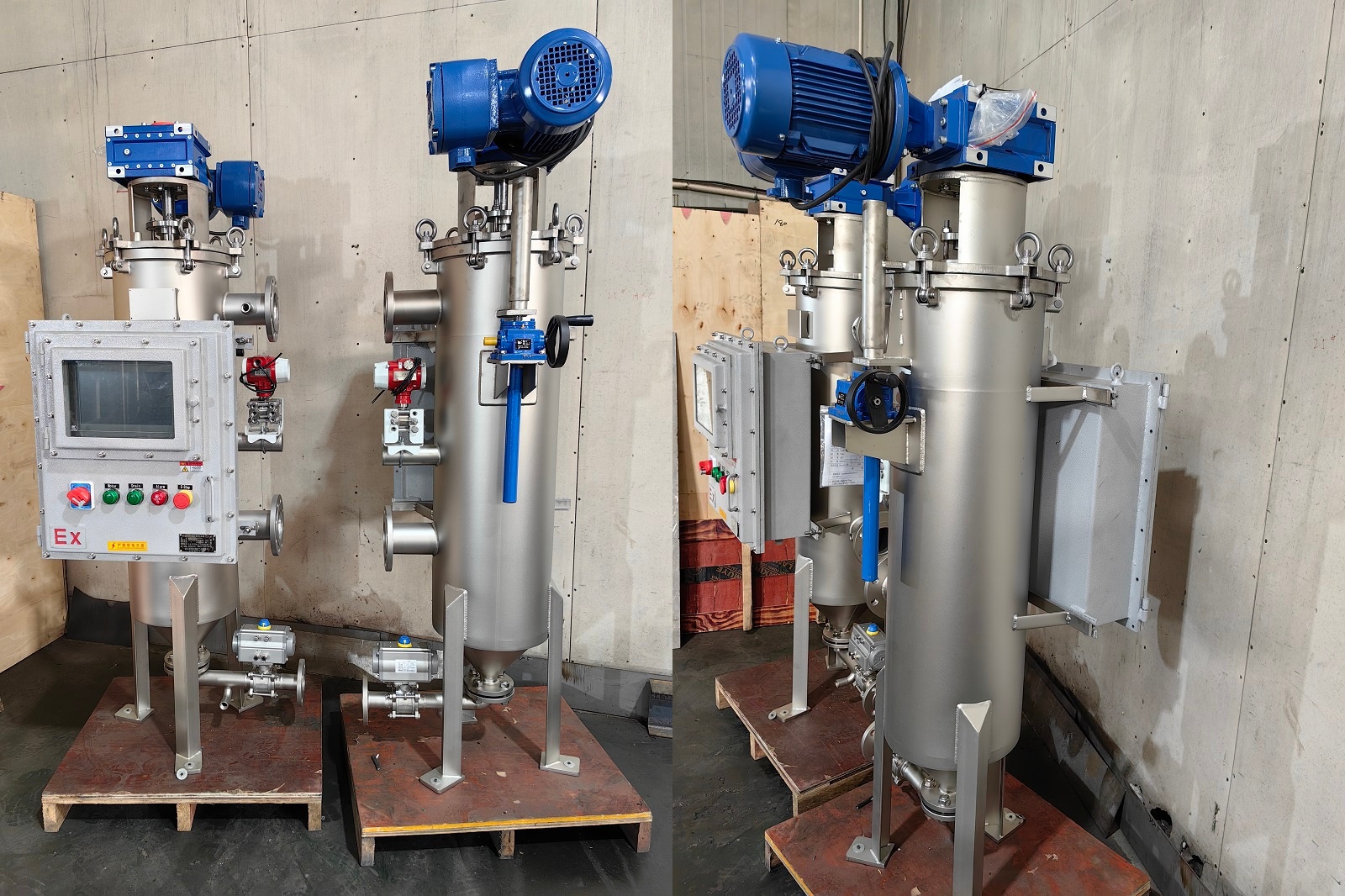
For this project, our Spiral Scraper Self-Cleaning Filter provided a reliable solution for filtering high-solids water-based paint at 12,000 kg/h, with viscosities up to 13,200 mPa·s, while meeting the client's requirements for 100 μm filtration accuracy and ATEX Zone 1 explosion-proof operation.
At JX Filtration, we do more than supply equipment. We analyze the characteristics of the process media and recommend the filtration technology that best matches the application. Our experience in high-viscosity and high-solids paint filtration allows us to deliver solutions that improve reliability, reduce maintenance, and protect critical equipment from unnecessary failure.