Dewatering Poultry Processing Sludge for Organic Waste Recovery
How two integrated Sludge dewatering Press systems helped a U.S. recycler turn wet sludge into compost‑ready material – with room to grow.
Background
Our client is an organic waste recycling company based in the United States. They collect sludge from several poultry processing plants. This sludge is a by‑product of the plants’ wastewater treatment, and it contains a moderate amount of fats, oils, and grease (FOG) – not excessive, but enough to require careful handling.
The company’s goal is to transform this wet waste into a valuable resource for composting. To do that, they need to reduce the water content, increase the solids concentration, and make the material easier to transport and blend with other compost ingredients.
The Challenge
When they approached us, they were already receiving sludge from their partner plants, but they had plans to expand their operations. Their current setup wasn’t designed for the higher volumes they expected. Here’s what they needed to achieve:
- Feed rate: 5,000 gallons per hour, running 24/7.
- Feed solids: Approximately 8% total solids.
- Target: A dewatered cake with as little free water as possible – but not bone‑dry, because the material would go into an aerobic composting process, where some moisture is actually beneficial.
- Operational concerns: The sludge contains a small amount of oil and grease, which can clog or foul some types of dewatering equipment. The equipment must be reliable, easy to maintain, and able to handle this slight oil content without frequent cleaning.
They also needed a compact, integrated solution that could be installed quickly and run with minimal operator attention.
Our Solution
After evaluating their flow rate and solids loading, we recommended a single Model 403 Sludge dewatering Press – it was more than capable of handling 5,000 GPH at 8% solids. The design is particularly well‑suited for oily sludges because the self‑cleaning spiral mechanism resists clogging and doesn’t rely on filter cloths that would blind with grease.
However, the customer had bigger plans. They told us they were expanding their intake capacity in the near future, and they wanted to avoid a second installation later. So instead of buying one unit now and another later, they decided to order two Model 403 Integrated Systems, both constructed in SS304 stainless steel for durability and corrosion resistance.
Each integrated “all‑in‑one” system includes:
- The Sludge Dewatering Press (Model 403)
- A polymer dosing unit (for flocculation)
- A dosing pump
- A sludge feed pump
Everything is skid‑mounted and pre‑piped, so installation was straightforward – just connect power, water, and inlet/outlet lines.
The Outcome
The two units have been manufactured, fully tested, and shipped to the client’s site. Look what we delivered:
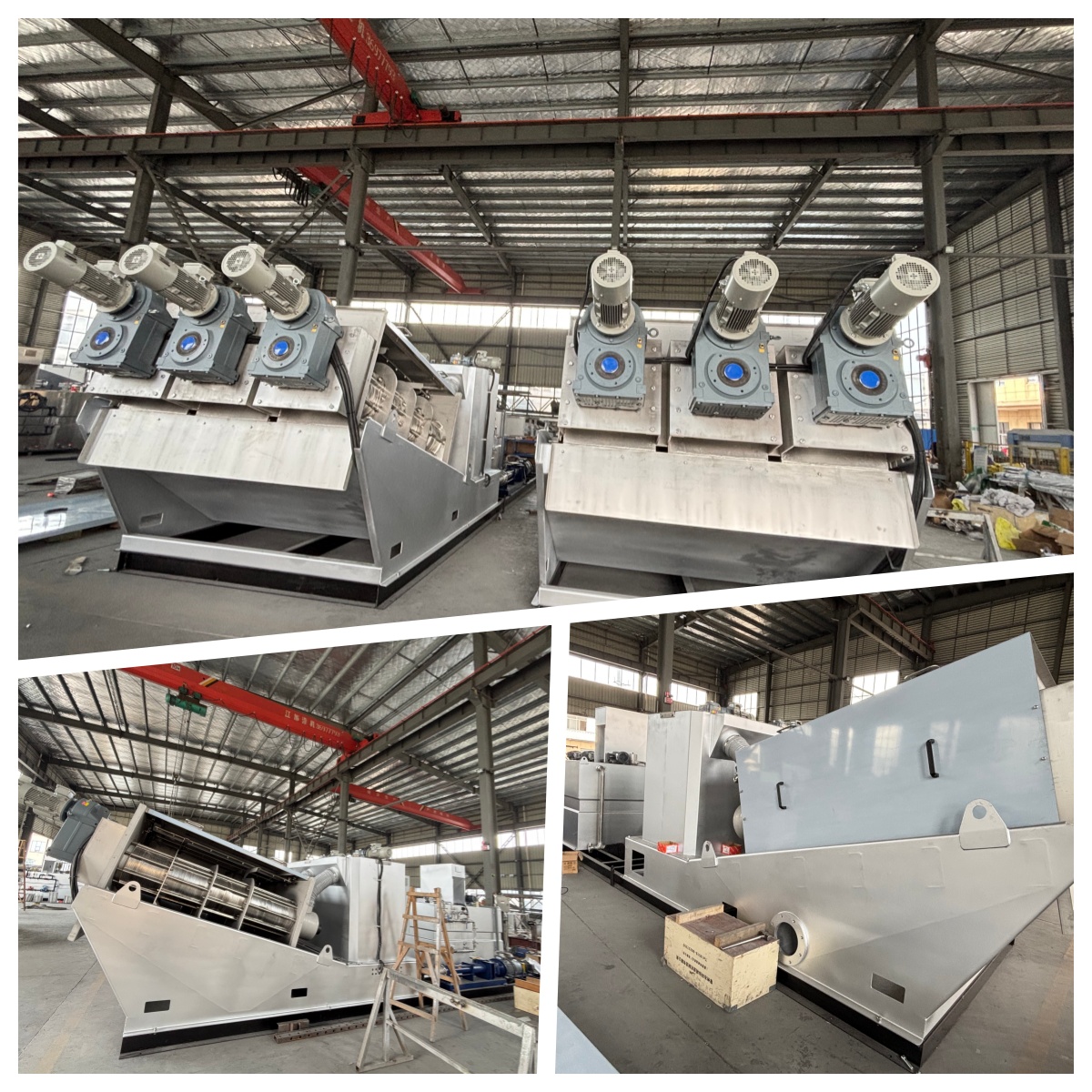 And here is the video:
What We Learned
This project reinforced a few key lessons:
- Listen to the client’s long‑term vision. Even though one machine was sufficient today, the customer wisely chose two to support their expansion – saving time and cost in the long run.
- Match the technology to the material. For oily DAF sludge, the self‑cleaning screw press is a far better choice than belt filter presses or plate‑and‑frame units.
- Keep it integrated. A pre‑assembled system with all pumps and dosing controls reduces installation headaches and ensures consistent performance.
We’re proud to have helped this organic recycler turn a challenging waste stream into a valuable compost ingredient – and we look forward to supporting them as they continue to grow.
If you have a similar dewatering challenge – whether it’s poultry sludge, food waste, or any other organic by‑product – we’d love to hear about it and help you find the right screw press solution.